Sciatica can make sitting, standing, walking and even sleeping difficult. The pain may begin in the lower back or buttock and travel down one leg. Some people also experience tingling, numbness or weakness. Early assessment by a qualified physiotherapist can help identify the possible cause and guide safe, personalised treatment.
What is sciatica?
Sciatica describes symptoms caused by irritation or compression of the sciatic nerve or its nerve roots. It is not a diagnosis by itself. A proper assessment is important because similar symptoms may also arise from the lumbar spine, muscles, joints or other medical conditions.
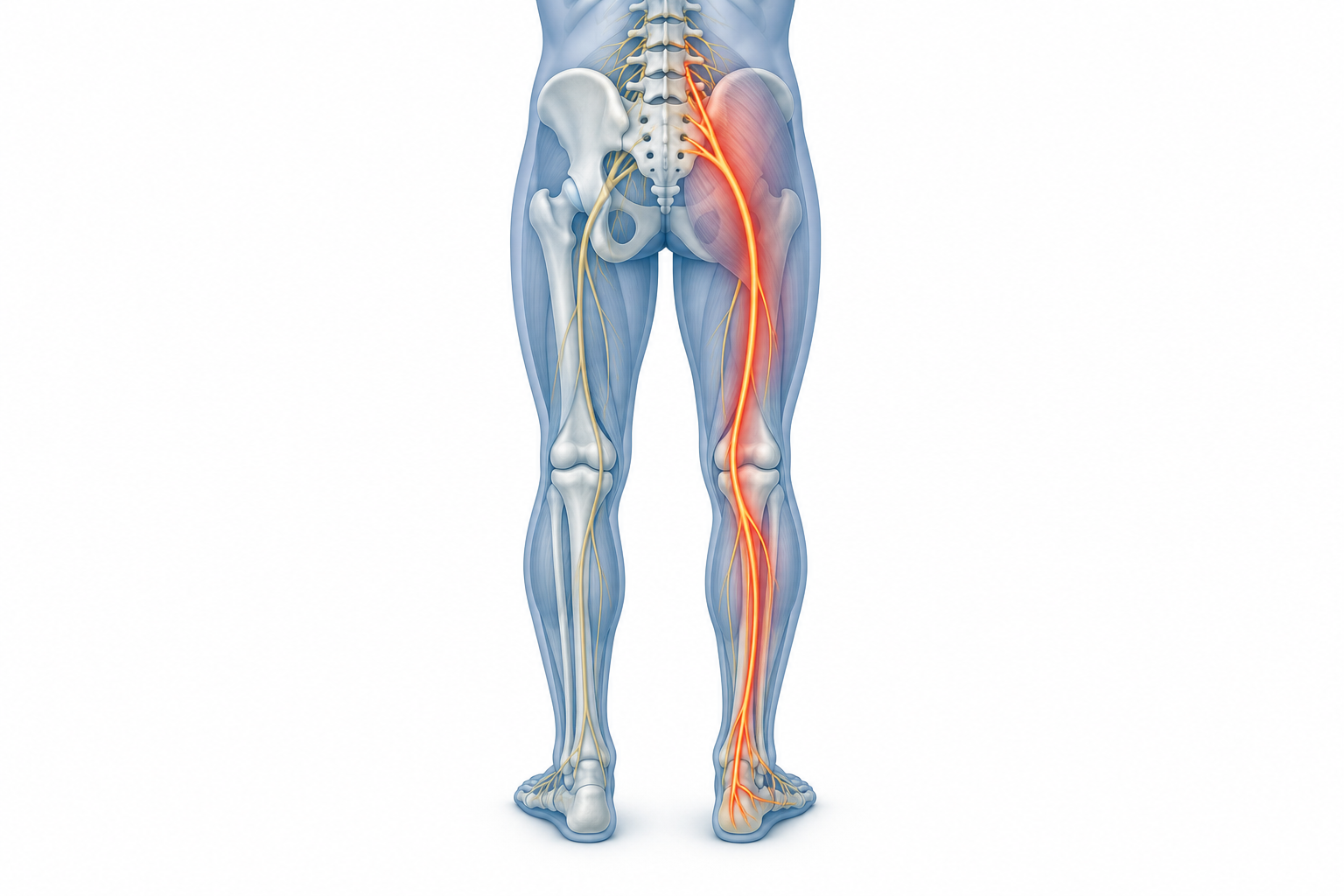
Common symptoms of sciatica
- Pain travelling from the lower back or buttock into the thigh, calf or foot
- Tingling or numbness in one leg
- Burning, electric or shooting pain
- Pain aggravated by prolonged sitting, bending, coughing or sneezing
- Weakness or difficulty while walking
What can cause sciatic pain?
Common causes include a lumbar disc problem, age-related spinal changes, reduced spinal mobility, muscle tightness and poor movement habits. However, the same treatment is not suitable for everyone. The direction of pain, neurological symptoms, posture, muscle strength and daily activities must be assessed before planning treatment.
When should you consult a physiotherapist?
Consider a physiotherapy assessment when leg pain continues for several days, symptoms repeatedly return, sitting or walking becomes difficult, or pain starts affecting sleep and routine work. Assessment is also important when tingling, numbness or mild weakness is present.
How physiotherapy may help
After assessment, treatment may include pain-relieving measures, guided movements, mobility work, strengthening, posture correction and activity modification. At Sai Physiotherapy Spine Care & Paralysis Centre, treatment is planned according to the patient’s condition, symptoms and functional goals. Advanced options such as the Decompression Traction System and Class 4 Laser may be considered when clinically appropriate.
Our aim is to help suitable non-emergency patients manage pain, improve movement and explore conservative care before considering surgery. If surgery is medically required, we also provide structured post-surgical rehabilitation.
Do not ignore these warning signs
Seek urgent medical attention if back or leg pain is accompanied by loss of bladder or bowel control, numbness around the groin or saddle area, rapidly increasing weakness, fever, unexplained weight loss, significant trauma or severe night pain. These symptoms require prompt medical evaluation.
Frequently asked questions
Can sciatica improve without surgery?
Many non-emergency cases can improve with appropriate conservative management. The expected recovery depends on the cause, severity, duration of symptoms and the person’s overall health.
Should everyone with sciatica perform the same exercises?
No. An exercise that helps one person may aggravate another person’s symptoms. Exercises should be selected after assessing pain behaviour, movement, strength and neurological signs.
Is complete bed rest advised?
Prolonged bed rest is generally not helpful for routine sciatica. Safe movement and gradual return to activity are usually preferred, but advice should be personalised.
Sciatica assessment in New Ranip, Ahmedabad
If sciatica is affecting your walking, work or sleep, a detailed physiotherapy assessment can help you understand the problem and the available treatment options.
Sai Physiotherapy Spine Care & Paralysis Centre
New Ranip, Ahmedabad
Call for an assessment: 99246 22773
Monday to Saturday: 8:00 AM to 9:00 PM
This article is for general education only and does not replace an individual medical or physiotherapy assessment.